Last updated: September 10, 2026
Key Takeaways
- Verify you can find every access point in under 5 minutes.
- Standing water over the field 24 to 48 hours after rain is a problem.
- For many homes, that means every 3 years; larger households, smaller tanks, or water-heavy homes may need a shorter interval.
- A field that can handle 150 to 250 gallons spread across a day may still complain if that volume arrives in a few hours.
Drain field maintenance & prevention — complete guide: a well-kept drain field lasts longer when the septic tank is pumped on schedule, water use stays steady, and the soil around the field is protected from compaction, roots, and surface water. I’m going to show you how to keep a drain field working, what warning signs mean, and which fixes actually help versus the ones that only waste time.
Who this guide is for, and what it assumes you already know
This drain field maintenance & prevention guide is for a homeowner with a conventional septic system and a soil absorption field — often called a drain field, leach field, or absorption field — who wants to prevent failure rather than react to it. I’m assuming you already know where the septic tank is, where the field lines run, and, if not, that you should consult a licensed septic professional or local health department to confirm the layout before doing any work. I’m also assuming you can do basic yard work, read a warning sign, and keep records. For layout and permitting basics, see the U.S. EPA septic guidance and your local health department.
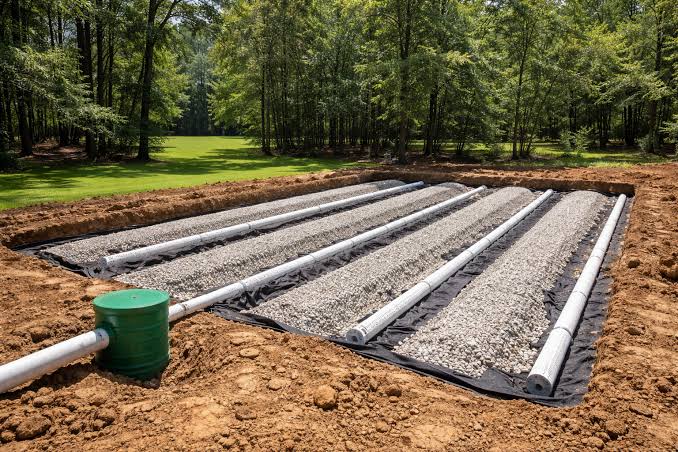
A drain field is not a bathtub drain with a bigger pipe. It is a shallow network of perforated pipe or chamber units installed in carefully prepared soil, usually at least several inches below grade and often protected by gravel or a molded media. That soil does the final treatment, but exact performance depends on local soil, depth, and loading, so consult a septic professional if you are unsure how your site was designed. If it gets saturated, compacted, clogged with biomat, or hit with too much water too fast, the field can stop accepting effluent. The usual mistake is to treat the field like dead space in the yard, but it is part of the treatment system, so a professional should confirm where it is and how it should be protected.
This guide is for standard residential systems, not for a mound system, sand filter, aerobic treatment unit, or a property with known high groundwater problems. Those systems have different maintenance rules, and the manufacturer, installer, or local health department should be consulted before using generic drain-field advice. It is also not for a site already showing sewage surfacing, strong indoor sewer odors, backed-up fixtures, or a field that stays wet for days after normal use; in that case, prevention is already over and you need a qualified septic contractor or local health department guidance before doing anything else.
I would also separate two jobs that people mix together. One is maintenance: pumping the tank, managing water, and protecting the field. The other is repair: replacing crushed pipe, fixing a distribution box, or rehabilitating a clogged biomat. Maintenance is a homeowner job. Repair is not a “try something and see” job.
For authoritative background, I point readers to the U.S. EPA’s septic system guidance and local health department rules, because drain field design and setback requirements vary by jurisdiction. A state-level onsite wastewater program or a county environmental health office is often the right place to confirm local standards. For national guidance, the EPA’s household septic system page and the CDC’s septic safety information are both useful references.
What a drain field actually does — and why prevention matters
What a drain field actually does — and why prevention matters comes down to one job: a drain field disperses clarified wastewater from the septic tank into unsaturated soil, where microbes, air, and mineral particles help finish treatment. The field does not “dry out” the way many people imagine. It works best when it stays lightly loaded, well drained from the surface, and free of anything that blocks infiltration. The key word is infiltration: the rate at which liquid enters soil. If infiltration slows too much, the field ponds internally and then at the surface.
The usual failure process is predictable. Solids that should have stayed in the tank move out, or a tank goes too long without pumping and sends more fine material to the field. Then a slimy layer called biomat forms at the soil interface. Biomat is normal to a point; it is part of how the field treats wastewater. But if it gets too thick, or if the soil is already wet and oxygen-starved, absorption drops. Add roof runoff, irrigation, a parked truck, or tree roots, and the field can tip from “working” to “failing” without much warning.
The biggest prevention mistake is overconfidence. A septic system can look fine for months while the soil is silently losing capacity. That is why drain field maintenance & prevention is mostly about load management, not dramatic interventions. If the tank is kept healthy and the field is not abused, many systems run for decades. If the field is stressed repeatedly, even a well-built system can fail early.
I also want to be clear about what maintenance cannot do. No additive, yeast packet, enzyme bottle, or “septic shock” treatment can reverse a saturated field or a field that has failed because of compacted clay, a broken pipe, or a high water table. At best, such products are unproven. At worst, they encourage delay while the real problem gets worse. The EPA does not recommend routine septic tank additives as a substitute for pumping and proper system care.
A practical benchmark: if you know the tank has not been pumped in 3 to 5 years, that is already a maintenance problem, even if the toilets still flush. Many tanks need pumping on that kind of cycle, though actual timing depends on tank size, household size, and water use. A one-size rule is less useful than a record of sludge and scum levels, but a blank record is a warning in itself.
How do I maintain a drain field without damaging it?
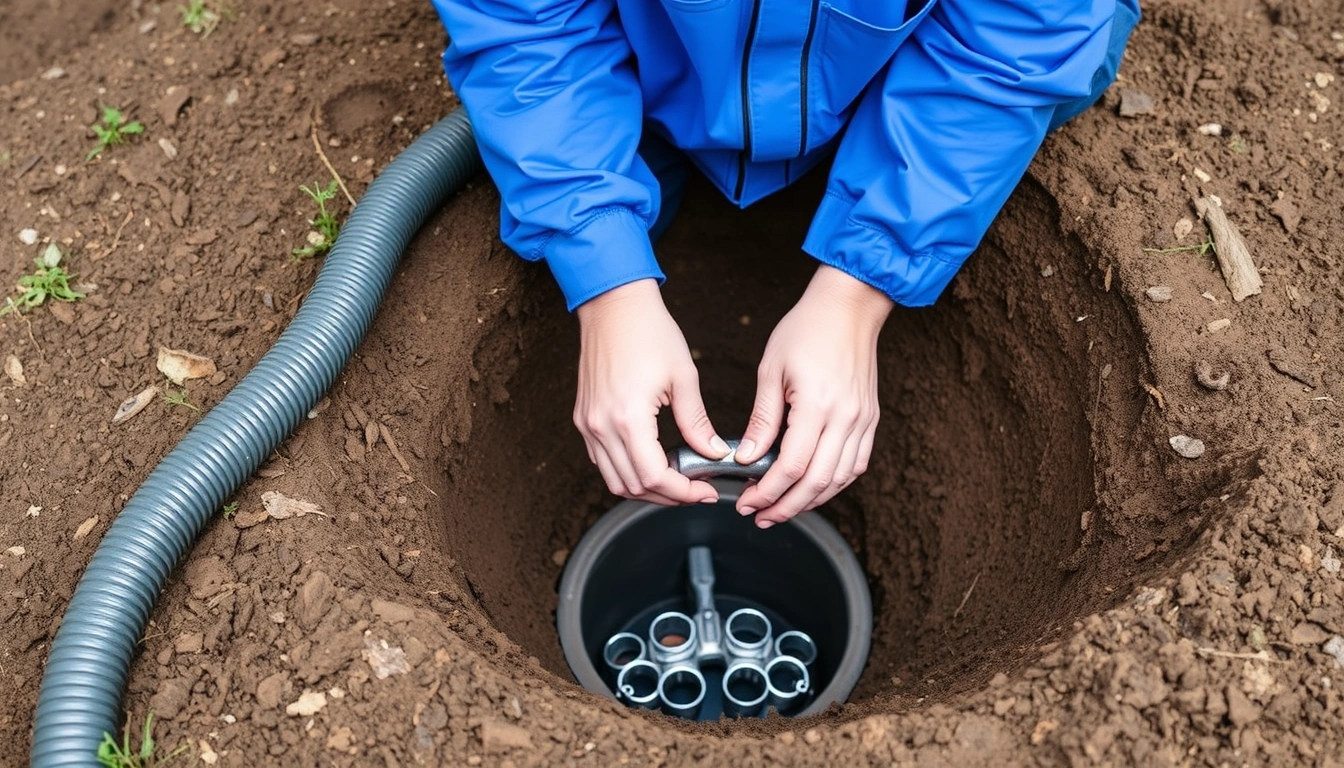
You maintain a drain field by controlling what enters it, what sits on top of it, and how much stress the soil takes over time. The best drain field maintenance plan is not one dramatic annual task. It is a small set of habits done consistently: pump the tank, distribute water use, keep heavy loads off the field, and watch for early signs of trouble.
Here is the core routine I would follow for a conventional residential system:
- Map the field and tank access first. Mark the tank lids, distribution box, and the approximate field area with stakes or flags. Keep a sketch with 10-foot reference points from the house, driveway, and known trees. Verify you can find every access point in under 5 minutes. A problem is any uncertainty about where the field runs, because digging blind can crack a pipe or crush a chamber.
- Pump the septic tank on a scheduled interval. For many homes, that means every 3 years; larger households, smaller tanks, or water-heavy homes may need a shorter interval. Verify the pumper records the sludge and scum condition, not just the date. A problem is a tank that is nearly full of solids before pumping, because solids can move into the field and shorten its life.
- Keep all roof, footing, and sump water away from the field. Downspouts should discharge well away from the absorption area; many local codes require drainage to daylight or a storm system, not onto the septic field. Verify the field stays higher and drier than surrounding runoff paths after a 1-inch rain. A problem is standing water over the field 24 to 48 hours after rain.
- Limit water use peaks inside the house. Spread laundry over the week, and avoid running several high-volume fixtures at once. A practical target is no more than one or two large washer loads in a short block of time. Verify the field does not gurgle, back up, or smell after heavy water days. A problem is repeated hydraulic overload, which pushes effluent faster than the soil can accept it.
- Keep vehicles and compacting equipment off the field. No cars, trailers, riding mowers with soft tires if the soil is wet, or dump piles on top of the lines. A soil compaction event can reduce oxygen and infiltration for years. Verify the surface stays unfurrowed and the grass remains healthy. A problem is ruts or crushed soil over the lines, because compaction can permanently reduce percolation.
- Control roots before they reach the system. Keep large trees such as willow, poplar, maple, and elm far enough away that roots are unlikely to chase moisture toward the lines. If a tree is already close, prune or remove it before roots invade the field. Verify there are no unexplained wet strips near tree lines. A problem is root intrusion, which can block pipes and open joints.
- Use the right cover crop and keep the surface shallow. Grass is the standard cover because it holds soil without deep roots. Keep fill shallow and avoid adding more than a light layer of topsoil unless the system designer allows it. Verify the field is mowed, not gardened, and no thick mulch is piling up. A problem is a bed, fence post, or ornamental tree planted over the field.
- Watch for changes and document them. Record odors, soggy spots, plumbing slowdowns, and the last pumping date in a notebook or phone note. Check monthly during the wet season and after storms. Verify the pattern is stable, not worsening. A problem is a new symptom that repeats after each rain or laundry cycle, which usually means the field is losing reserve capacity.
The point of this routine is not perfection. It is to keep the field within the conditions it was designed for. A drain field that is not overloaded can treat wastewater quietly for years. One that is constantly stressed will fail faster than the owner expects.
What should I check before I assume the field is failing?
Before you blame the field, check the tank, the drainage around the yard, and how much water the household is pushing through the system. A wet patch in the yard or a slow drain inside the house is not enough evidence on its own, because the cause may be an overfull tank, a blocked distribution box, a broken branch line, or plain old water overuse. The first question I ask is simple: did the system get more water than it could handle?
Start with the tank service history. If the tank has not been pumped in more than 3 to 5 years, or if nobody knows the date, that is the first thing to correct. A tank that is full of solids can send sludge to the field. That doesn’t prove the field is ruined; it means the field may have been overloaded by a tank problem. Also check whether the inlet and outlet tees or baffles are intact. A missing or broken baffle can let solids short-circuit the tank.
Next, look for surface water problems. A drain field on a slope that collects runoff from the roof, driveway, or uphill yard can be starved of oxygen by plain rainwater. If downspouts empty toward the field, or if a French drain discharges there, that is not a coincidence. The soil can only absorb so much. In many systems, even a few hundred gallons of extra water in the wrong place can turn a marginal field into a wet field.
Then think about daily loading. Two long showers, laundry, dishwashing, and guests in the same 24-hour period may be enough to expose a weak field. This matters because many systems fail not on average use, but on peak days. A field that can handle 150 to 250 gallons spread across a day may still complain if that volume arrives in a few hours. I’m not giving a universal capacity number because design flow varies by home and code, but the principle is stable: spikes matter.
Also inspect the yard surface. A healthy field area is usually grassy, firm, and not especially lush compared with the surrounding lawn. A strip that stays greener than the rest can mean excess moisture below, not better fertilizer. Avoid using the area as a shortcut across the yard, and check for soft ground, crusting, or sewage odor after storms. Those are warning signs, not decoration.
If you have a distribution box, or D-box, make sure it is accessible and level. A D-box routes effluent to multiple field laterals. If it tilts, one lateral may get too much flow while another gets too little. That creates uneven saturation. A simple level check can reveal whether one line is being overloaded. If you are not sure where the D-box is, that alone is useful information: inaccessible components make diagnosis harder and expensive.
When should I stop and call for help?
You should stop the maintenance approach and get qualified septic help when the problem is no longer about prevention. A drain field that has already lost its ability to accept wastewater is not something to “tune up” with chemicals or extra water. Here are the situations that change the job:
Sewage is surfacing in the yard or pooling over the field: This means the soil is no longer accepting effluent at the current load — stop using high-water fixtures and call a septic contractor or local health department guidance line immediately. Continued use can create a sanitation hazard and can force a more expensive repair.
Indoor fixtures are backing up after normal use: This can point to a tank, pipe, or field problem — stop adding water to the system and get the tank inspected and pumped before anything else. If the backup is below the lowest drain in the house, that is a serious system warning, not a nuisance.
The tank has not been pumped in 5+ years and there is no record of service: This means solids may have moved downstream — schedule pumping and a professional inspection of baffles, tees, and the D-box. If solids have reached the field, prevention is already behind the curve.
The yard stays wet for more than 48 hours after ordinary rain: This suggests poor drainage, compaction, or a shallow, saturated field — stop driving, mowing with heavy equipment, or digging there and have the site evaluated. A persistently wet field often needs diagnosis before any homeowner action.
You smell strong sewage outdoors or inside near the system: Persistent odor can mean effluent is surfacing, a vent is blocked, or a component is failing — inspect access points only if they are easy to reach, then call for service. Odor plus wet soil is especially concerning.
You know the system is a mound, aerobic unit, or sand filter rather than a standard gravity drain field: Those systems have different operating rules and service needs — follow the manufacturer or installer’s maintenance plan, not generic drain-field advice. A wrong maintenance move can cause real damage.
In each of these cases, the consequence of waiting is the same: more loading of a system that is already losing capacity. That can turn a repairable issue into a field replacement, which is the expensive outcome nobody wants.
The mistakes people make with drain field maintenance
The mistakes are usually simple, and the consequences are not. Most bad drain field advice is a shortcut that shifts the problem from visible to hidden until the soil gives up. I would avoid these five errors every time:
-
Pumping only when there is a backup. The consequence is that solids sit in the tank long enough to escape into the field. The correct alternative is scheduled pumping based on tank size, household size, and sludge levels, usually somewhere in the 3- to 5-year range for many homes.
-
Routing gutters, sump pumps, or irrigation runoff onto the field. The consequence is hydraulic overload and oxygen loss in the soil. The correct alternative is to send clean water away from the septic area and keep the field as dry as the site allows.
-
Driving or parking over the drain field. The consequence is soil compaction and possible pipe damage, especially when the ground is wet. The correct alternative is to keep the field as a protected lawn area only.
-
Planting trees, shrubs, or deep-rooted ornamentals over the lines. The consequence is root intrusion and blocked openings. The correct alternative is shallow-rooted grass or other surface cover that does not hunt for moisture underground.
-
Pouring additives into the tank because a label claims they “restore” the system. The consequence is false confidence and delay. The correct alternative is to pump the tank, reduce water load, and inspect the field. If a field is failing, chemistry in a bottle will not rebuild soil structure.
-
Ignoring the distribution box and only looking at the tank. The consequence is that one line can be overloaded while the others sit underused. The correct alternative is to include the D-box in inspections if your system has one, especially after a wet season or a service call.
I would add one more mistake that is easy to miss: covering the field with decorative stone, impermeable fabric, or thick mulch to make it look neat. The consequence is that you can trap moisture and make visual monitoring harder. The correct alternative is a simple grass cover and a surface you can actually inspect after rain.
When the standard advice does not apply
Standard drain field advice changes when the site or system has unusual constraints. The biggest edge case is a high groundwater site. If groundwater rises close to the field elevation seasonally, the soil may never get enough air to treat effluent properly during wet periods. In that setting, the field is not just “wet”; it is operating in the wrong environment. Prevention then means managing site water, not just the septic tank, and the local code may require a different system type.
Another edge case is clay soil or a field that was built on a marginal soil layer. Clay holds water and slows percolation. A field in clay can work, but it has less reserve than a field in loamy, well-structured soil. On those lots, even moderate extra water from a leaking toilet flapper, a long shower habit, or a misdirected downspout can show up fast. The modification is simple: be stricter with water use and stormwater control than you would be on a sandy site. The margin for error is smaller.
Frozen ground is another special case. In cold climates, a shallow field can be affected by frost if it lacks proper cover or if the surface has been disturbed. If the ground freezes deeply, do not assume the system is broken just because a few drains are slow in midwinter. The right response is to reduce load and wait for thaw before assuming a structural failure. But if backup or surfacing continues after thaw, it needs inspection.
Older systems with no accessible records also need a different approach. If you do not know the tank size, field layout, or service history, maintenance becomes part detective work, part system reset. In that case, I would start with a licensed